
Key Takeaways
- Reddit is cited more often than any other single source across 680 million citations pulled from ChatGPT, Google AI Overviews, Perplexity, Gemini, and Claude between August 2024 and April 2026, averaging roughly 40% frequency (5W, "AI Platform Citation Source Index 2026")
- 44.2% of ChatGPT's citations come from the first third of a page, and cited content averages 20.6% proper nouns and specific entities versus 5-8% in generic writing (Search Engine Land, February 2026)
- 68.01% of Google searches ended without a click in the first four months of 2026, up from 60.45% in 2024, and click-through drops nearly 60% further when an AI Overview appears (SparkToro, June 2026)
- The same customer-language research that improves ad copy conversion also produces the specific, first-person phrasing AI engines are already citing most
More people are asking ChatGPT or Google's AI Overview a question before they ever open a normal search results page. If your brand doesn't show up inside that answer, you've lost the customer before you had a chance to compete for the click. That's the whole idea behind AI visibility, or what people have started calling GEO (generative engine optimization).
The strange part is that most brands are trying to fix this with the wrong toolkit. More keywords, more schema markup, more of the same marketing language that was already underperforming in regular search. The data points somewhere else. The sites AI engines cite most aren't the most polished. They're the ones full of real, unfiltered customer language. Reddit is the clearest example, and it's not close.
I do VOC research for DTC brands for a living, pulling customer language out of Reddit threads, YouTube comments, and Amazon reviews. What's interesting is that the same research that makes ad copy convert better also happens to be exactly what AI systems are already citing. That's not a coincidence. Here's why, and what to actually do about it.
What AI visibility actually means for a DTC brand right now
In the first four months of 2026, 68.01% of Google searches ended without a click, up from 60.45% in 2024 (SparkToro, June 2026, based on Similarweb clickstream data). When an AI Overview shows up on a search, the click-through rate on the page underneath drops by nearly 60% on top of that. People get an answer and move on.
For a DTC brand, that means a customer might never reach your landing page at all. They ask ChatGPT or an AI Overview something like "what's a good electrolyte mix that doesn't taste artificial," and the answer names two or three brands. If yours isn't one of them, you don't lose the sale on a technicality. You get skipped before consideration even starts.
Google searches ended without a click 68.01% of the time in the first four months of 2026, up from 60.45% in 2024, and click-through drops nearly 60% further when an AI Overview is present on the results page (SparkToro, "In 2026, Less Than One Third of Google Searches Still Send a Click," June 2026, based on Similarweb clickstream data).
That's the shift. Getting found isn't only about ranking a page anymore. It's about being the thing an AI system quotes when someone asks it a question in your category, whether that person ever clicks through or not.
Why AI engines cite Reddit more than almost anything else
Across 680 million citations pulled from ChatGPT, Google AI Overviews, Perplexity, Gemini, and Claude between August 2024 and April 2026, Reddit was cited more often than any other single source, averaging roughly 40% frequency (5W, "AI Platform Citation Source Index 2026," May 2026). No other domain comes close.
That number moves, though. ChatGPT's Reddit citation share fell from roughly 60% to 10% in six weeks in late 2025, after a single Google parameter change that had nothing to do with Reddit's content quality. If you're trying to reverse-engineer one platform's exact citation algorithm, you're chasing something that shifts month to month. What doesn't move is the reason Reddit gets cited in the first place: it's full of unscripted, first-person answers to specific questions, written by people with no reason to sound like a brand.

For a longer look at why Reddit specifically outperforms other research methods, this comparison of Reddit versus focus groups covers the same pattern from the research side rather than the AI citation side.
How ChatGPT actually decides what to cite
A February 2026 study analyzed 1.2 million ChatGPT responses and 18,012 verified citations to work out what actually gets pulled into an answer (Search Engine Land, "ChatGPT Citations Study," February 2026). Three patterns stood out.
First, 44.2% of citations came from the first third of a page. AI systems don't reward burying the answer under three paragraphs of brand story. Second, headings written as questions got cited roughly twice as often as flat headings, and 78.4% of question-based citations traced back to an H2 tag specifically, not the body text underneath it. Third, cited passages averaged 20.6% proper nouns and specific entities, brand names, ingredient names, exact numbers, nearly three times the 5-8% you'd find in generic writing.
ChatGPT pulls 44.2% of its citations from the first third of a webpage, cites question-format H2 headings at roughly twice the rate of flat headings, and favors passages averaging 20.6% proper nouns and named entities versus 5-8% in typical writing (Search Engine Land, "ChatGPT Citations Study," analysis of 1.2 million responses, February 2026).
Put together, that's a fairly specific blueprint: answer the actual question early, phrase headings the way someone would ask them out loud, and be specific instead of vague. It also happens to be exactly how VOC research forces you to write, because real customer questions are specific. Nobody types "premium wellness solution" into Reddit. They type "does this actually stop the 3pm crash or is it just caffeine."
Why customer language outperforms marketing language for AI citation
Every VOC report I've built for a DTC brand starts the same way: reading through Reddit threads and YouTube comments in that brand's category and writing down the exact phrases people use, unprompted. Not the brand's language. The customer's.
That's the same instinct AI systems reward. A line like "unlock your best self with our clinically formulated blend" has no entities, no specifics, and answers a question nobody asked. A line pulled from real conversation, like "I switched because the other one made my stomach hurt within an hour," is specific, first-person, and answers exactly the kind of question someone asks an AI assistant before buying.
The overlap between "copy that converts" and "copy that gets cited by AI" isn't an accident. Both get graded on the same thing: does this sound like an answer a real person would give, or does it sound like a brand trying to sell something. AI engines have just made that distinction measurable.
I wrote about this same gap from the ad copy angle in Your Ad Copy Is Written in Your Language, Not Your Customer's, and how to close it in how to rewrite ad copy using customer language. AI visibility is the same problem, just showing up in a new channel.
How DTC brands are actually being found through AI right now
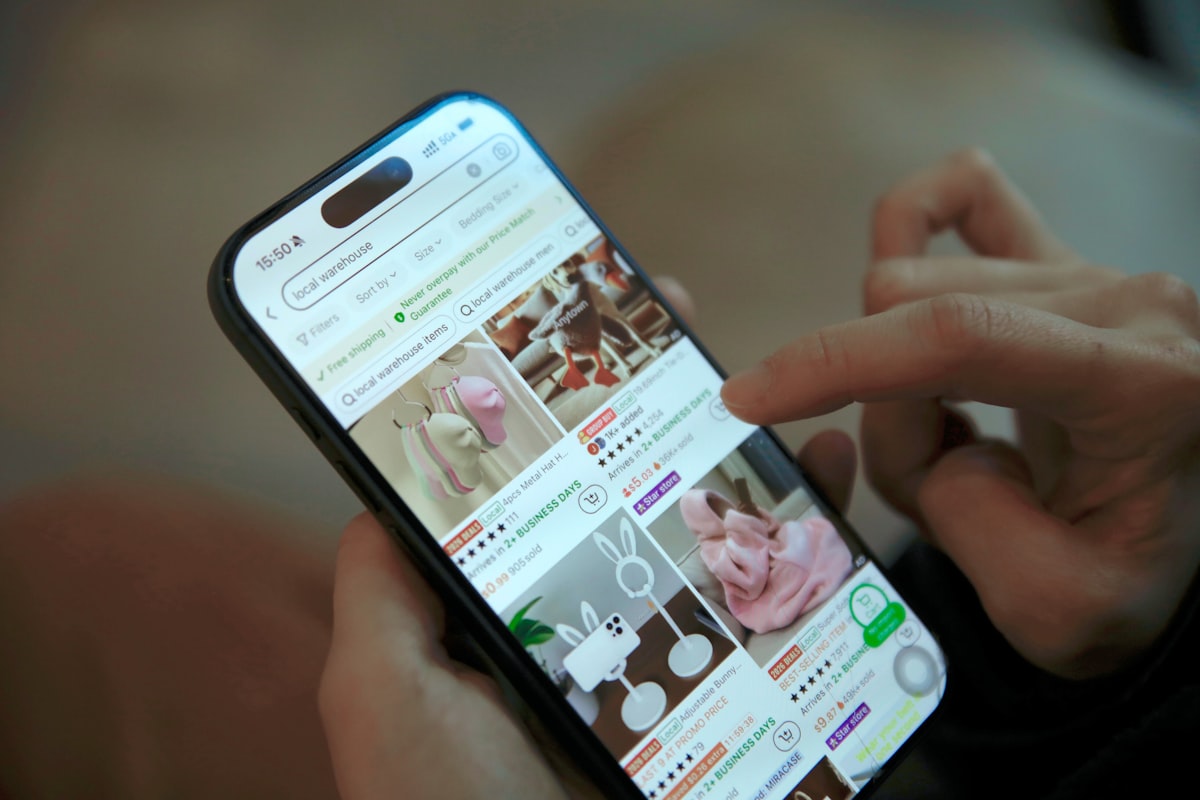
77.6% of US consumers said they'd used AI to help with shopping in the past six months, and 43.21% said they do it at least weekly, according to an April 2026 survey of 1,009 US consumers (Exploding Topics via Search Engine Land, April 2026). That's not a future trend to plan around. It's already how a large share of your category researches purchases.
77.6% of US consumers used AI to help with shopping in the past six months, and 43.21% did so weekly or more often, based on an April 2026 survey of 1,009 US consumers (Exploding Topics, cited via Search Engine Land, "New Data: 77% Use AI to Shop," April 2026).
The questions people ask an AI assistant before buying a supplement, a skincare product, or a coffee subscription aren't that different from what they'd type into Reddit's search bar. "Is this actually worth the price compared to X." "Does this break me out." "What do people say after using it for a month." If your content never answers those exact questions in those exact words, an AI system has nothing specific of yours to cite. It cites whoever already answered it, usually a Reddit thread.
How to actually write for AI visibility, not just Google
None of this requires a new tool or a new department. It's the same research work as writing better ad copy, applied to a few more places on your site.
- Mine actual customer language first, from Reddit threads, YouTube comments, and reviews in your category, before writing anything new. This guide to Reddit research for DTC brands covers the process.
- Rewrite FAQ sections and landing page headers as the literal questions customers ask, not the questions your brand wishes they asked. This post on VOC research for landing pages covers how to structure that.
- Answer the question in the first 40 to 60 words of each section. Don't build up to it with brand story first.
- Get specific: names, numbers, ingredients, exact use cases. Vague sentences don't get cited, no matter how well they're written.
- Publish that content publicly, where it's crawlable. An AI system can't cite an answer that only lives in a customer service inbox or a private review platform.
For the fundamentals of what VOC research actually involves before you get to any of this, this post on what voice of customer actually means is the place to start.
All of this is a research problem before it's a writing problem. You can't write in customer language you haven't actually read. Reddit, YouTube comments, and reviews are where that language already exists, unprompted and specific, which is exactly what both customers and AI systems respond to.
Shoppers have their own view of how far to trust these systems. In our study on why shoppers block AI recommendations, 59% actively suppress the AI answer with an extension or a search operator.
Want the customer language research done for you?
Insightios researches Reddit, YouTube, and Amazon reviews for your product category and delivers a structured report with the exact language your customers use, ready to put into ad copy, landing pages, and FAQ content.
Frequently asked questions
What is AI visibility, or GEO, for a DTC brand?
AI visibility, sometimes called GEO or generative engine optimization, means showing up in the answers ChatGPT, Google AI Overviews, and Perplexity give when someone asks a question in your category. It matters because 68.01% of Google searches ended without a click in early 2026, up from 60.45% in 2024 (SparkToro, June 2026), meaning more customers get an answer before ever reaching a website.
Why does Reddit get cited more than brand websites?
Reddit was cited more than any other single source across 680 million citations studied between August 2024 and April 2026, averaging roughly 40% frequency (5W, "AI Platform Citation Source Index 2026"). It's not domain authority. Reddit is full of specific, first-person answers to specific questions, which is exactly what AI systems pull into responses.
Does writing in customer language really help me get cited by ChatGPT?
It aligns with the exact mechanics ChatGPT's citation study found: content cited by ChatGPT averages 20.6% proper nouns and named entities, versus 5-8% in generic writing (Search Engine Land, February 2026). Customer language is naturally specific and entity-dense, since real people name brands, ingredients, and exact problems instead of writing in vague marketing terms.
Is optimizing for AI citations different from traditional SEO?
The mechanics overlap but the target differs. Traditional SEO optimizes to rank a page. AI citation optimization aims to get a specific passage extracted into an answer, which rewards front-loaded, question-answering content more than traditional ranking factors do. 44.2% of ChatGPT citations came from the first third of a page (Search Engine Land, February 2026).
How do I find out what language my customers actually use?
Read where they talk without being asked anything: Reddit threads, YouTube comments, and reviews in your product category. Write down the exact phrases that repeat, not the ones you'd expect. That research doubles as AI visibility research and ad copy research, since both reward the same specific, first-person language.
Sources
- 5W. "AI Platform Citation Source Index 2026." May 1, 2026. prnewswire.com. Retrieved July 2026.
- Search Engine Land (Kevin Indig). "ChatGPT Citations Study: 44% of Citations From First Third of Content." February 18, 2026. almcorp.com summary. Retrieved July 2026.
- SparkToro (Rand Fishkin). "In 2026, Less Than One Third of Google Searches Still Send a Click." June 9, 2026. sparktoro.com. Retrieved July 2026.
- Search Engine Land, citing Exploding Topics (Semrush). "New Data: 77% Use AI to Shop." April 27, 2026. searchengineland.com. Retrieved July 2026.
- TechEdgeAI. "AI Platform Citation Source Index 2026 Shows Reddit's Surge." 2026. techedgeai.com. Retrieved July 2026.