Your customers are already explaining what would make them buy. We find it.
Before spending more on ads, campaigns, or a launch, know what your audience is actually saying. Real conversations from the places they talk honestly.
AI research tools are a starting point, but they skim. We go deep into Reddit, YouTube, Quora, Instagram, LinkedIn and more. The places where people say what they actually think. That's where the real insights are.
How it works
Four steps. You tell us what you need. We do the research. You walk away knowing your audience better than your competitors do.
You tell us what you need
Your niche, brand, research questions, and what you want to understand about your audience.
We go where they actually talk
Reddit, YouTube, Quora, Facebook, forums. The places where people are honest about what they think.
We read, analyze, and organize
Pains, desires, what they've tried, what they trust. Every insight labeled and grouped.
You get a clear picture
Real quotes, real patterns, and our take on how to connect with this audience.
What you'll actually use it for
Before you spend more on ads, product pages, or a launch, find out what your customers already say. The research lands differently depending on where you need it.
Ads
Know exactly what language your audience responds to
Stop guessing which hook will land. The research surfaces the exact phrases, fears, and desires your customers use, ready to drop into creative.
Positioning
Find the angle your competitors are missing
Understand what the market is tired of hearing and what no one is saying yet. That gap is usually where the strongest positioning lives.
Product
Validate ideas before you invest in building them
See whether real demand exists, what people are already asking for, and what objections will kill a launch before you commit the budget.
Retention
Understand why customers buy once and don't come back
The reasons are almost never price. They're usually friction, unmet expectations, or a habit that never formed. The research tells you which one.
Outreach
Talk to prospects in the words they use for themselves
Cold emails and DMs that use the buyer's own language, not yours, convert at a completely different rate. This gives you that language.
What you actually get
Real extracts from client reports we delivered. They're partial, since the full versions stay private.
Pains & Desires
What your audience struggles with and what they actually want
Brand Intelligence
How a brand is perceived across reviews, Reddit, and YouTube
Audience Differentiation
How two segments talk differently about the same category
Custom Research
Specific questions you need answered, with verbatim quotes
Pains
Three themes came up again and again across this audience.
The first is physical accumulation. The surface complaint is "too many products" but the real experience goes deeper: drawers full of things they will never use, a growing sense of waste, and the discomfort of owning things they can't throw away and don't want to keep.
"I have a literal bucket of samples I need to go through."
"It started to feel like a chore to get through the products."
"My bathroom counter was a disaster zone of half-used samples."
"I realized I was just hoarding little plastic bottles."
The second theme is financial guilt. It is not just disappointment. There is a specific shame that comes from paying for things you did not want. The language customers used is telling: "throwing money in the trash," "paying for junk," "samples I could get for free at Sephora."
"Why am I paying to test products for companies?"
"It feels like a waste of money when 4 out of 5 items are duds."
"I was spending $15 a month on trash."
The third is the feeling of being ignored. Many customers had filled out preference profiles and felt genuinely betrayed when those preferences were consistently overlooked. This is not just frustration with wrong products. It is the specific sting of being told your input matters, and then discovering it did not.
"I explicitly said no eyeliners and I got one almost every month."
"Why have a beauty profile if you're just going to send everyone the same thing?"
"I felt like I was just getting whatever overstock they had."
Desires
The core desire is simple: one product that genuinely works for them. Not volume, not variety for its own sake. One real discovery per box that earns its place in their routine. When that happens, the whole experience feels worth it.
"I just want to find my next holy grail product."
"I did find my favorite mascara through a box once."
"That one amazing find makes it almost worth it."
There is also an emotional dimension that gets overlooked. The subscription was never really just about products. It was about having a monthly moment that felt like a treat for yourself. When the contents stopped delivering, the ritual lost its meaning too.
"It used to be the highlight of my month, now it's just meh."
"It went from being a treat to being a nuisance."
"I wish I could get that initial excitement back."
The last theme is true personalization. Not a quiz that gets ignored, but a box that actually reflects who they are. Several customers said they would pay more for this.
"I'd pay more for a box that was truly personalized."
"Imagine a box where everything actually matches your skin tone."
"A truly customized box would be a game changer."
Partial sample. Full reports include additional sections tailored to your specific research questions.
Data sources: Trustpilot (12,447 reviews) · Reddit (1,588 discussions) · YouTube (87,177 views across 21 influencer videos). Partial sample.
The picture behind the ratings
The official Trustpilot score is 4.2 out of 5, with 70.9% five-star reviews across 12,447 ratings. That looks like a healthy, well-loved brand. But when you look at Reddit discussions about the same products, only 29% of comments are positive. The gap matters. It tells you that satisfied customers leave reviews while skeptical ones go somewhere else to talk.
This kind of cross-platform discrepancy is one of the most useful things audience research can surface, because it changes how you read any single source in isolation.
What the loyal audience is actually saying
Among customers who love the products, the language is specific and personal. Hormone and menopause relief shows up in 37% of positive reviews. Gut health and sleep improvement follow closely. These are not vague endorsements. They are people describing symptoms they had struggled with for years.
"I'm on my third bottle. I'm 47 and started having symptoms that didn't feel typical - constant pressure in my chest, unexplained weight gain, poor sleep."
"Been taking for 2 years now. Worked for my hot flashes and helped my sleep. Pricey but it works for me. I don't miss a day."
"I take it and it's AMAZING. I would pay the price over and over again."
12% of reviewers explicitly mention reordering. For a supplement brand, that is a strong loyalty signal.
What's actually driving the complaints
The top complaint in negative reviews is not about the product. It is about refund and return issues (42% of negative reviews) and customer service (40%). Efficacy comes third. That is a meaningful finding, because the product is not the problem. The experience around it is.
"AWFUL customer service with no ethics, transparency, or accountability."
"They charged me even after I cancelled."
"I emailed three times and still nothing was resolved."
A second layer comes from customers who feel the marketing set expectations the product did not meet. Two press investigations in 2025 - one about ad practices, one about specific weight loss claims - have amplified this perception in organic communities.
What YouTube reveals
The most-watched video about Happy Mammoth is a doctor's honest, science-critical review with 47,500 views - more than any promotional content in the brand's YouTube ecosystem. The comments split into two clear groups: convinced believers and people who decided not to buy after watching.
"Just 10 minutes into this video my mind is made up. I will not be buying this."
"I was a fan of Hormone Harmony because I felt improvements, but stopped taking it because of the cost."
"I am still looking for a natural way to balance my hormones at 49."
Both sides are vocal. The brand has strong advocates and active skeptics talking in the same places. Understanding both is what tells you where the real opportunity is.
Partial sample. Full reports include additional sections tailored to your specific research questions.
Same product category. Same marketing channels. Very different conversations. When men and women discuss protein supplements online, they are often describing two entirely separate experiences, even when buying the same product.
Men
Performance, proof, and ingredient transparency
The dominant theme in men's conversations is measurable performance. "Works" means something specific: more weight on the bar, faster recovery, visible muscle. The language is direct and results-focused. Taste is secondary. What matters is the label and the results it produces.
"I don't care what it tastes like. If it gets me my 160g of protein and doesn't destroy my gut, that's all I need."
"I switched to a cleaner label because I got tired of not knowing what was actually in the proprietary blend."
"I'll pay more for third-party tested. I'm not risking my health for a $10 saving."
"The taste is secondary. Macros, absorption, no bloating. That's the checklist."
The fear underneath this conversation is being deceived. Underdosed products, proprietary blends that hide cheap fillers, marketing claims without evidence. Men in this category are deeply skeptical of the industry but intensely loyal to products that earn their trust through transparency and consistent results.
Women
Daily feel, body fit, and being seen as a customer
Women's conversations center on how the product makes them feel across the entire day, not just in the gym. Recovery matters, but so does bloating, energy levels, taste, ingredient quality, and whether the product was actually designed with their body in mind.
"I stopped buying the men's version because it made me so bloated. Found one specifically for women and the difference was immediate."
"I don't want to get bulky. I just want to feel better and recover faster. But most of the branding feels like it's not made for me."
"The artificial sweeteners in most of them give me headaches. It took me months to figure out why I felt awful after workouts."
"The taste actually matters to me. If I have to choke it down every morning I just stop taking it after two weeks."
The fear here is different. It is less about deception and more about being an afterthought. Women frequently describe feeling that the supplement industry was built for men, and that they are buying products never designed for their dosage needs, hormonal realities, or specific goals.
Key Insight
The differentiating insight
Both audiences are skeptical of the supplement industry, but for entirely different reasons.
Men
Skeptical of being cheated on ingredients. Want proof the product does what it claims.
Women
Skeptical of being ignored as a customer. Want proof the product was designed for them.
An ad leading with "transparent labeling and third-party testing" will resonate strongly with a male audience. An ad leading with "designed for how women actually train and recover" is speaking to an anxiety that barely appears in the men's conversation at all. These two audiences need different creative, different proof points, and different trust mechanisms, even if the product is identical.
Partial sample. Full reports include additional sections tailored to your specific research questions.
This format is built around specific questions provided before research begins. Each question is answered with verbatim quotes from the audience, plus a synthesis of the patterns behind them. Below are two of the six questions from this report.
Category 1: Identity & Tribal Language
What labels do practitioners use to describe themselves?
Cold therapy practitioners identify at the intersection of biohacker culture, endurance sports, and longevity thinking. The language they use to describe themselves reveals which door brought them in, and which messages will land.
"I'm not a wellness bro. I'm an endurance athlete who can't afford to be sore for three days."
"Started as a Wim Hof guy three years ago. Ice baths were just the next logical step."
"I'm what you'd call a longevity nerd. I'm 38 and I'm basically trying to be 28 forever."
"Not really into the biohacking label. I just know I sleep better and feel less inflamed when I plunge."
Category 2: Barriers & Frustrations
What horror stories are they sharing about DIY setups that failed them?
A large portion of this audience starts with DIY setups and eventually abandons them. Understanding the specific failure moment explains what they are actually paying for when they invest in a commercial product. It is not the cold water. It is the removal of friction.
"Spent $600 on a chest freezer conversion. Took me 8 hours to set up, the pump failed in month two, and I ended up buying a commercial unit anyway."
"Built my own wooden cold plunge. Looked amazing. Leaked within 60 days because the wood expanded. $400 and 40 hours of work, gone."
"My wife finally gave me the ultimatum after the third plumbing incident in our garage. DIY is not worth the marriage equity."
"I cringe when people say 'just get a chest freezer.' There's a reason commercial units exist."
Partial sample. Full reports include additional sections tailored to your specific research questions.
Research
Studies we publish in the open
Public studies anyone can read: shorter than a full engagement, but the same method applied to thousands of real comments in a category.
Magnesium Glycinate for Sleep: What Do People Who Take It Say?
About half say it helped them sleep (45%) and about 1 in 4 say it kept them up. Many found a different form that worked.
Beef Tallow for Skin: What Do People Who Tried It Say?
About 2 in 3 people who tried it were happy (68%) and about 1 in 8 broke out. Most people calling it pore-clogging never used it.
Are Beauty Advent Calendars Worth What They Claim?
Only about 1 in 5 value verdicts say yes (21%), and filler accessories are the top thing left unused (26%). Gifts are the top reason to buy.
Read a sample report before you decide
Real conversations from Reddit and health forums, turned into a complete VOC report. Six research questions answered with verbatim quotes and analysis. Enter your email and we'll send it to you.
Report on its way.
Check your inbox. You'll get it soon.
One report, or ongoing intelligence
Both are grounded in real conversations from the places your audience talks honestly.
Audience Research Report
$299 one-time, flat fee
One audience, market, or problem researched in depth.
- ✓ Research across Reddit, YouTube, Quora, Facebook, Instagram, and the communities where your audience is most active
- ✓ Real verbatim quotes covering pains, desires, objections, buying triggers, and the exact language your audience uses
- ✓ Our analysis on how to connect with this audience and where the real opportunities are
- ✓ Useful for ads, positioning, product pages, outreach, sales conversations, and more
✓ You don't pay until your report is delivered.
EU clients can be invoiced in EUR.
Not sure yet? Read a sample report first.
Audience & Competitor Intelligence
Monthly
Ongoing research for brands that ship ads, content, and offers every month.
- ✓ Fresh conversations and reviews from your category, tracked month over month
- ✓ How your audience's language, priorities, and objections shift over time
- ✓ What your competitors' customers praise, complain about, and switch over
- ✓ One research priority you pick each month, plus a concise report and quote bank you can act on
Most clients start with a one-off report first.
Prefer to talk? Book a free 20-min call.
The kind of questions you can ask
Agency or working with multiple brands? Let's talk.
From the blog
Research and VOC guides

What Does Compare at Price Mean, and When Is It Legal?
Nike, Lululemon and Quince are in court over crossed-out prices. Shoppers have been checking them for years.

How Many Black Friday Emails Is Too Many?
A third of shoppers would unsubscribe over holiday email volume. Many press spam instead.

Reddit's API Shutdown: Who Gets to Read Customer Conversations Now?
GummySearch had 135,000 users and still couldn't get a Reddit data license.
What clients say
Every review below is public on my Upwork profile, with the project type and date attached.
★★★★★
"Very reliable and detail-oriented. Delivered high-quality market research and clear insights. Highly recommend."
DTC Brand
Ecommerce
★★★★★
"Edu made a great research job! Perfectly understood the assignment and the profiles we were looking for. Executed efficiently and sooner than expected. Good communication and quick to answer."
Hospitality Company
Real Estate
★★★★★
"Eduard did a phenomenal job on this VOC research project. His work was detailed, well-organized, and delivered on time. Communication was smooth throughout, and he adapted quickly when we refined the project scope. Highly recommend for any research work you need to be able to rely on."
Agency
Marketing
★★★★★
"Eduard was very professional, clear and outcome focused. I received my reports in due time. Before, during and after, it was a delight to discuss improvement options and broaden the perspective. This way I got more than I asked for. I will definitely recommend Eduard."
SaaS Company
Software
★★★★★
"Eduard did a great job researching and providing customer insights for us. He is very professional and great to work with."
DTC Brand
Ecommerce
★★★★★
"Eduard was professional and delivered a quality report in line with the provided instructions and feedback. We look forward to partnering with him on future projects!"
Agency
Marketing
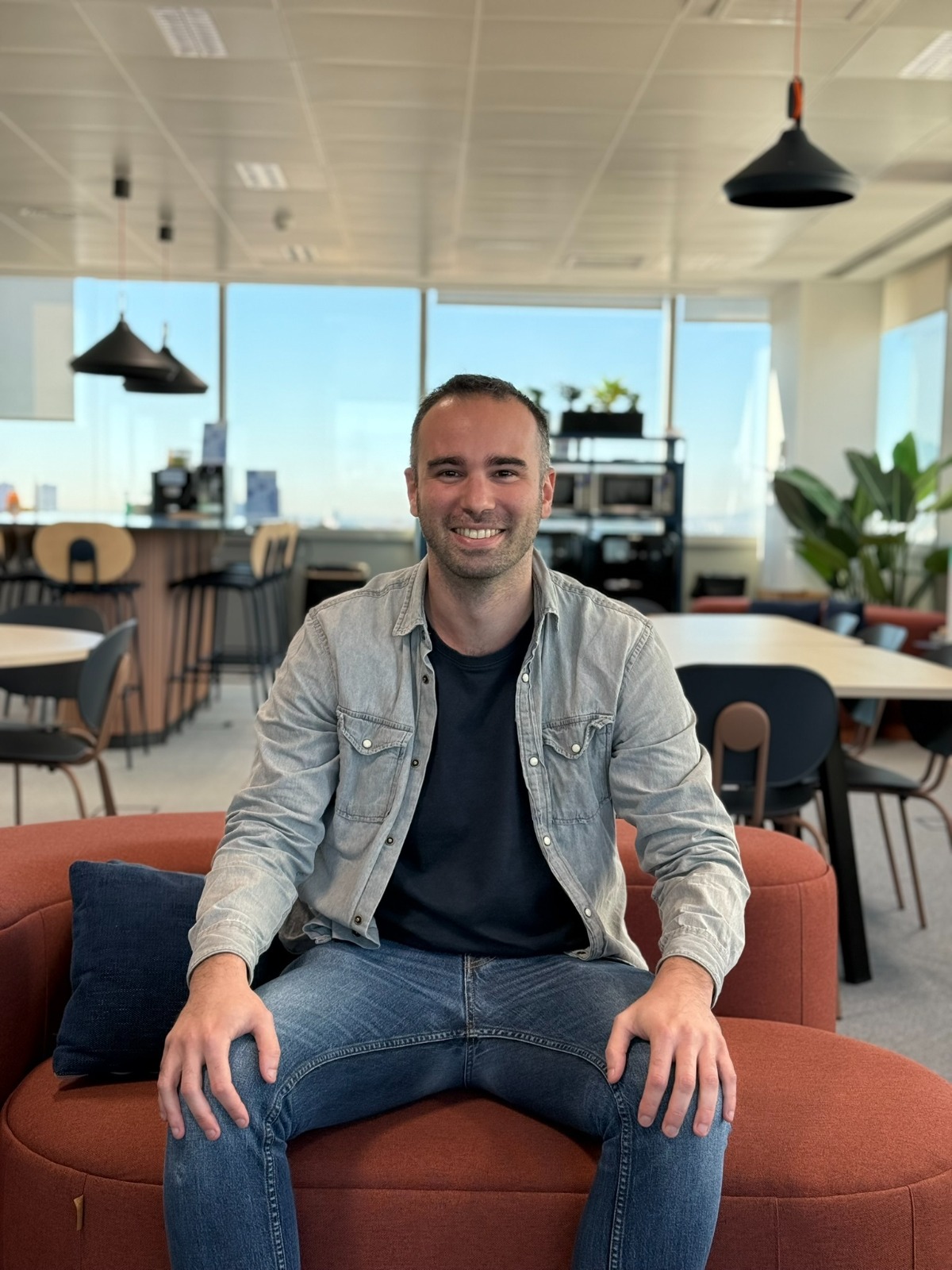
The person behind it
Hi, I'm Edu.
I'm from Barcelona, where I currently live. Curiosity has always driven me. Discovering new places, cultures, and ideas has defined most of my life.
I've always been passionate about business and how ideas can turn into meaningful things. With the explosion of AI, I'm amazed by how fast the world is changing and how many opportunities are opening up for anyone with a laptop and an internet connection.
After years living across different countries in Europe and working with all kinds of businesses, I decided to build something of my own. Doing what I love most: finding insights and helping others.
That's why I built Insightios. To find the kind of human insights that help companies get their positioning right, run better campaigns, or validate an idea before they bet on it. Not just using AI, but combining it with real conversations from the places your audience actually talks: Reddit, YouTube, Quora, Instagram, Facebook, and more.
Ready to know your audience?
Pick whichever path works for you. Either way, let's figure out what your audience is really saying.